

Number of mining farms decreases by 10% in Dagestan
The largest number of farms were identified in Irkutsk Region, Moscow Region, the Republic of Bashkortostan and Samara Region.

Found: 1865 results
The largest number of farms were identified in Irkutsk Region, Moscow Region, the Republic of Bashkortostan and Samara Region.

The legislative act is designed to bolster the cultural and economic potential of the region.
As for the avian population in the region, it reached 4,138,300 heads by the end of the year, representing an increase of 0.1%.
Airfare is not included in these prices, averaging around 15,000 rubles in both directions, depending on the region of departure.
life for citizens, make the Northern Caucasus more attractive to industrial investment and lay the groundwork for sustainable economic growth in the r...
Under the agreement signed between the Ministry of Digital Development of Dagestan and the Russian software developer, the region's educational instit...
Over the course of the past decade, there has been a notable two-fold growth in agricultural production within the region.

Rezvanov highlighted the Caspian fiberglass plant and the Akva sports and recreational complex in the Kizlyar region as exemplary projects.

The total number of small and medium-sized enterprises (SMEs) registered in the region amounts to 60,244, representing an increase of 9.1%
Additionally, the region is actively pursuing other initiatives in the field of renewable energy, including solar power and small-scale hydroelectric...

This has been announced by the head of the municipality Magomed Abdulkadirov in a live broadcast with the Region Management Center.
This is particularly significant given that Dagestan stands out as the largest wool producer in the North Caucasian region.
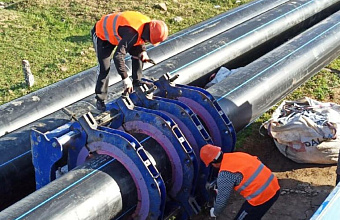
Abdulmuslimov, it was announced that the construction of three major water supply projects in Dagestan had been completed as part of the action plan f...
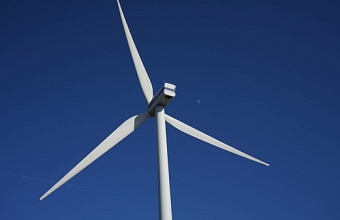
The project is scheduled for completion in 2026 and will provide energy for over 240 thousand households in the region.

The actual need for storage infrastructure in the region is estimated at approximately 250,000 tons.